
What Is a Stereoscope? A Complete Guide to 3D Viewing
4/19/20262 min read
Introduction
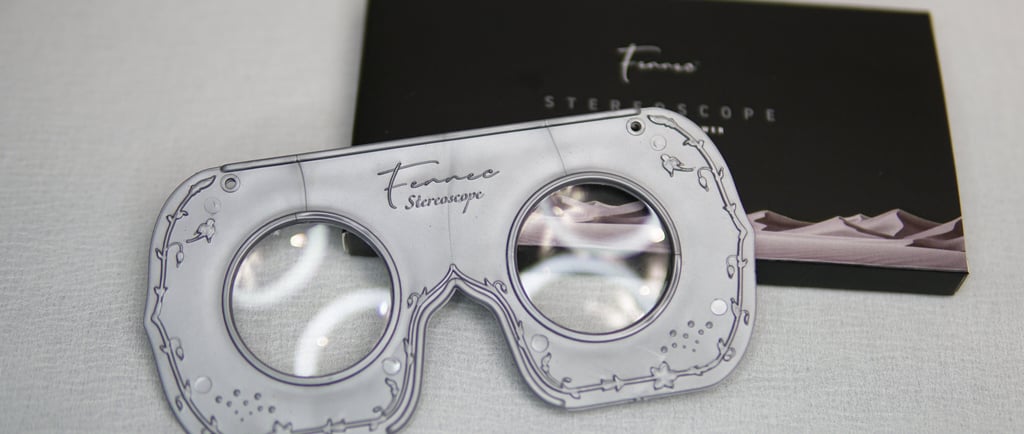
A stereoscope is a simple optical device that allows you to view two slightly different images as one three-dimensional (3D) image. Long before VR headsets and 3D screens, stereoscopes were used to experience depth in photographs—making flat images feel lifelike.
In this guide, you’ll understand how stereoscopes work, their history, types, and why they’re still relevant today.
What Is a Stereoscope?
A stereoscope is a type of 3D Pocket Viewer that displays two images—one for each eye—taken from slightly different angles. When viewed through the device, your brain combines them into a single image with depth.
This mimics how human vision naturally works, where each eye sees a slightly different perspective.
How Does a Stereoscope Work?
The working principle of a stereoscope is based on binocular vision.
Two images of the same subject are captured from slightly different angles
Each image is shown to one eye
The brain merges both images into one
This creates the illusion of depth (3D effect)
This process is called stereopsis, which is how humans perceive depth in real life.

History of the Stereoscope
The stereoscope has a rich history:
Invented in 1838 by Charles Wheatstone
Popularized in the 19th century as a home entertainment device
People used it to view travel scenes, historical events, and portraits
Became one of the earliest forms of immersive visual media
It was essentially the “virtual reality” of its time.
Types of Stereoscopes
1. Lens-Based Stereoscope
Uses lenses to magnify and merge images
Most common type used today
Portable and easy to use
2. Mirror Stereoscope
Uses mirrors instead of lenses
Larger and more precise
Often used for scientific purposes
3. Digital Stereoscope
Works with screens or digital images
Similar concept to VR headsets
What Can You View with a Stereoscope?
Stereo photo cards
Printed 3D images
Personal photographs (if shot correctly)
Educational visuals
Historical image collections
Why Are Stereoscopes Still Relevant Today?
Even in the digital age, stereoscopes remain valuable:
No screen required – purely optical experience
Enhances depth perception understanding
Useful for photographers and creators
Unique way to relive memories
Nostalgic and collectible
They offer a distraction-free, immersive experience that modern screens often fail to provide.
Who Should Use a Stereoscope?
Photography enthusiasts
Collectors of vintage items
Students learning optics and vision
Creators exploring unique storytelling formats
Anyone curious about 3D visual perception
Conclusion
A stereoscope is more than just an old optical device—it’s a fascinating way to experience images in depth using nothing but simple optics. It bridges the gap between historical innovation and modern curiosity.
If you're interested in seeing photos the way your eyes naturally perceive the world, a stereoscope offers a unique and meaningful experience.
Mail us at : Fennecstereo@gmail.com
COPYRIGHT © 2025 FENNEC STEREO